

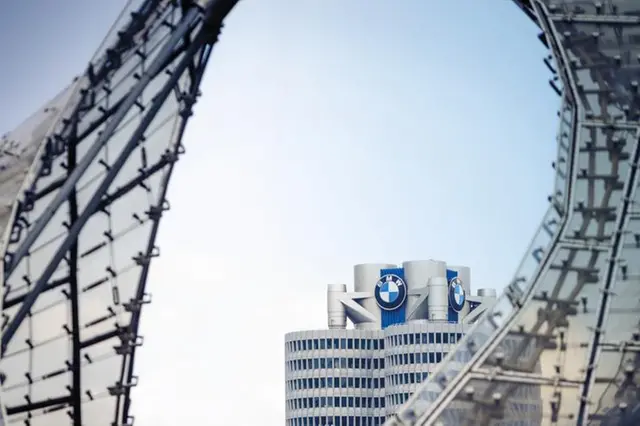
The intensified commitment not only strengthens BMW’s alignment with the Paris Agreement but also reflects a strategic shift toward full life-cycle decarbonization—from raw material sourcing and production to vehicle usage and end-of-life management.
BMW’s original benchmark aimed to cut 40 million metric tons of CO₂e across scopes 1, 2, and 3 by 2030. Its expanded ambition now projects a deeper 2035 reduction, fundamentally reshaping the company’s climate trajectory and business model.
By 2035, the automaker expects that each euro of revenue will be associated with less than half the CO₂e intensity recorded in 2019, signaling a structural shift in how value is created across the organization.
This updated target is accompanied by strategic enhancements across the supply chain, manufacturing, and product efficiency—an approach that underlines the company’s transition from incremental improvement to comprehensive decarbonization.
BMW Group’s strategy places significant emphasis on reducing emissions in areas that traditionally carry the highest embedded carbon, particularly high-voltage batteries, aluminum, and steel. These materials represent a substantial share of the company’s scope 3 footprint, especially as EV production scales.
To address this, BMW is intensifying:
- The use of renewable energy across supplier operations
- The integration of secondary raw materials
- Innovation efforts driven by its upcoming Gen6 battery technology
The company notes that EV adoption alone will not deliver the reductions required for 2030 and 2035. Decarbonization must occur across the full vehicle life cycle—regardless of powertrain.
Since 2020, BMW Group’s plants worldwide have sourced all externally purchased electricity exclusively from renewable energy. The company continues to replace fossil fuels with alternatives wherever viable.
Its newest facility in Debrecen, Hungary, stands out as a blueprint for future manufacturing. The plant is set to become BMW’s first vehicle factory to operate entirely without fossil fuels such as oil and natural gas, representing a major step toward fully decarbonized production.
BMW continues to expand electrification while improving the efficiency of all drive systems under its BMW EfficientDynamics program. This includes advances in aerodynamics, tires, drivetrains, and energy management systems.
The new BMW iX3 demonstrates these improvements, achieving up to 20 percent lower energy consumption under WLTP combined testing compared with its predecessor.
These gains underline the company’s strategy of pursuing efficiency enhancements across every vehicle class and powertrain.
BMW’s ability to meet its 2035 climate milestone will also depend on broader global developments. Key external factors include:
- Lower-carbon steel and aluminum production
- Expansion of charging infrastructure
- Advances in circular economy systems
- Continued progress in battery cell technology
To strengthen resilience, BMW Group is investing in advanced battery cell research centers and accelerating circularity initiatives that reduce material demand and improve lifecycle emissions performance.
BMW Group’s enhanced 2035 target represents one of the most ambitious decarbonization commitments in the automotive industry. By focusing on renewable energy, material efficiency, circularity, electrification, and next-generation manufacturing, the company is positioning itself at the forefront of global sustainable mobility.
The automotive sector’s shift toward large-scale decarbonization and electrification will be a central theme at the 5th Edition of the Electric Vehicle Innovation Summit (EVIS Abu Dhabi 2026), with EcoMobility Global (EMG 2026) on 13–14 October 2026 at ADNEC Centre Abu Dhabi.
These platforms will unite global automakers, policymakers, technology pioneers, battery developers, material innovators, and mobility leaders to discuss the future of clean manufacturing, next-generation EV platforms, circular economy systems, and the evolving climate strategies driving the transition to net zero.
Source: https://www.zawya.com/en/press-release/companies-news/bmw-group-sets-new-climate-target-for-2035-f8pluvi5